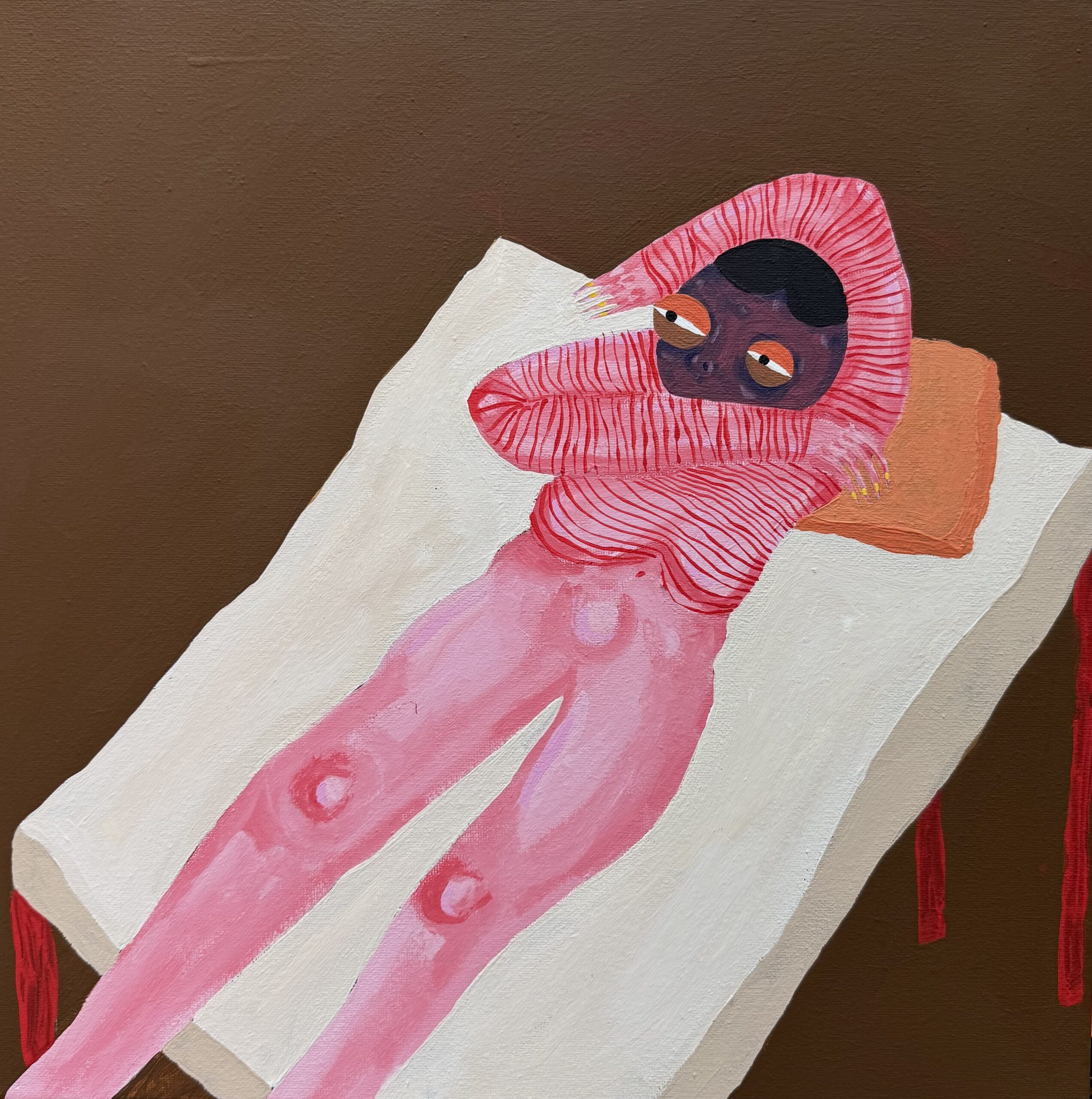
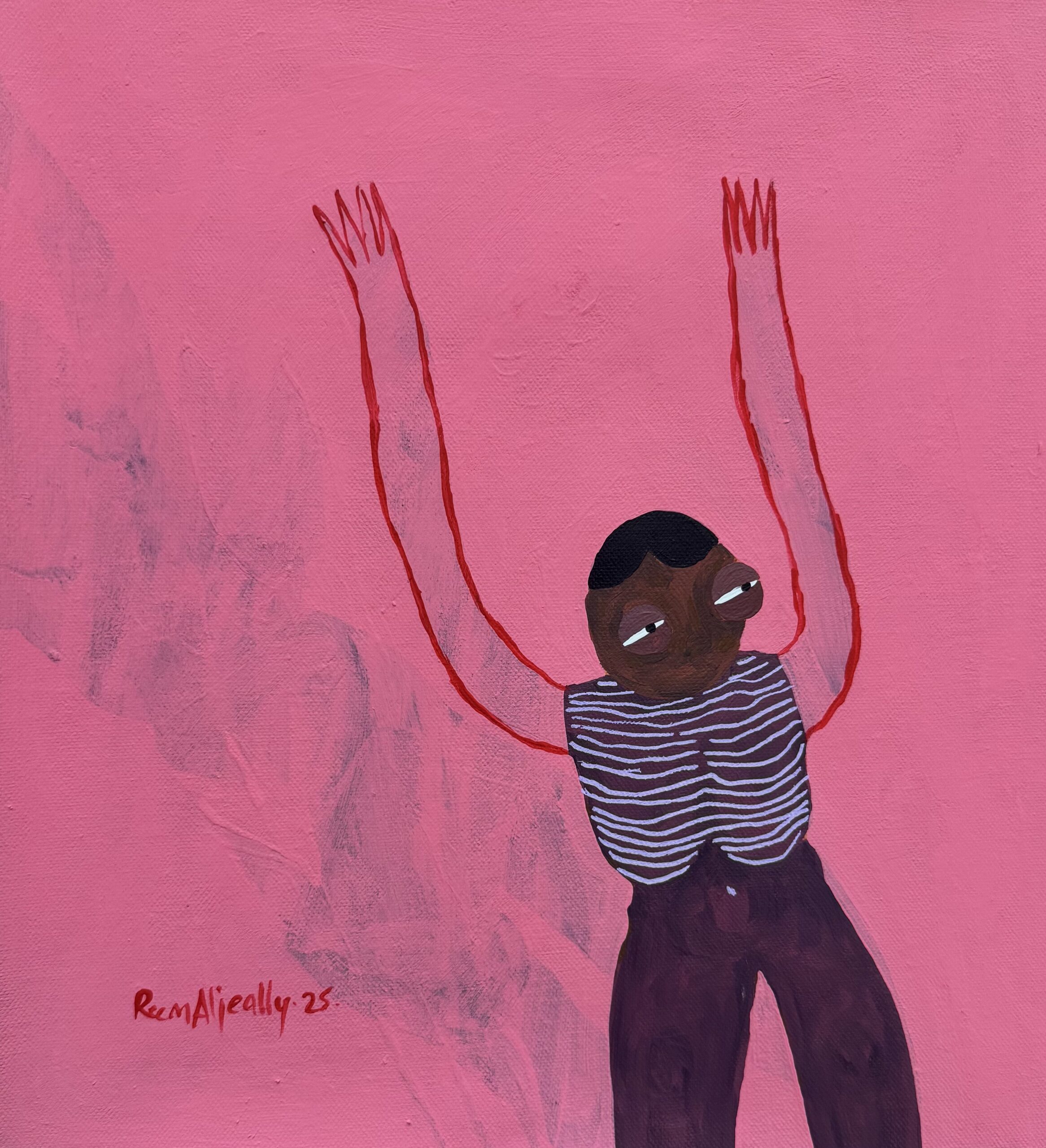
Conflict and war tend to be a dominant narrative that shapes our experiences and definitions as individuals and communities socially. In art, it is no different. Most artists of conflict area origin find their work defined by the circumstances surrounding their existence, whether they consciously embrace this identity as a defining lens in their art or resist being categorized solely by it. Since April 2023, many Sudanese artists and exhibitions of Sudanese art have been presented through a political, humanitarian and nostalgic lens, and while those remain indispensable, as a curator I question who is thinking of the art itself? To what extent can an artwork be evidence to change – emotional, political, stylistic, or social – within the artist’s life? How do our environments affect our visual memory and subsequently influence our artistic production?
This began with looking into my own artworks noticing how time, change – as well as stagnation – and exile has affected the formation of my artworks and my visual memory. The busy and intimate interiors that used to surround the figures in my paintings were gradually replaced with a subtle flatness in the background, isolating subjects in undefined spaces and timezones. In this sense, this transformation allowed the figure to metaphorically escape the confinement of the walls around it, opening the horizon to a better view of the world.
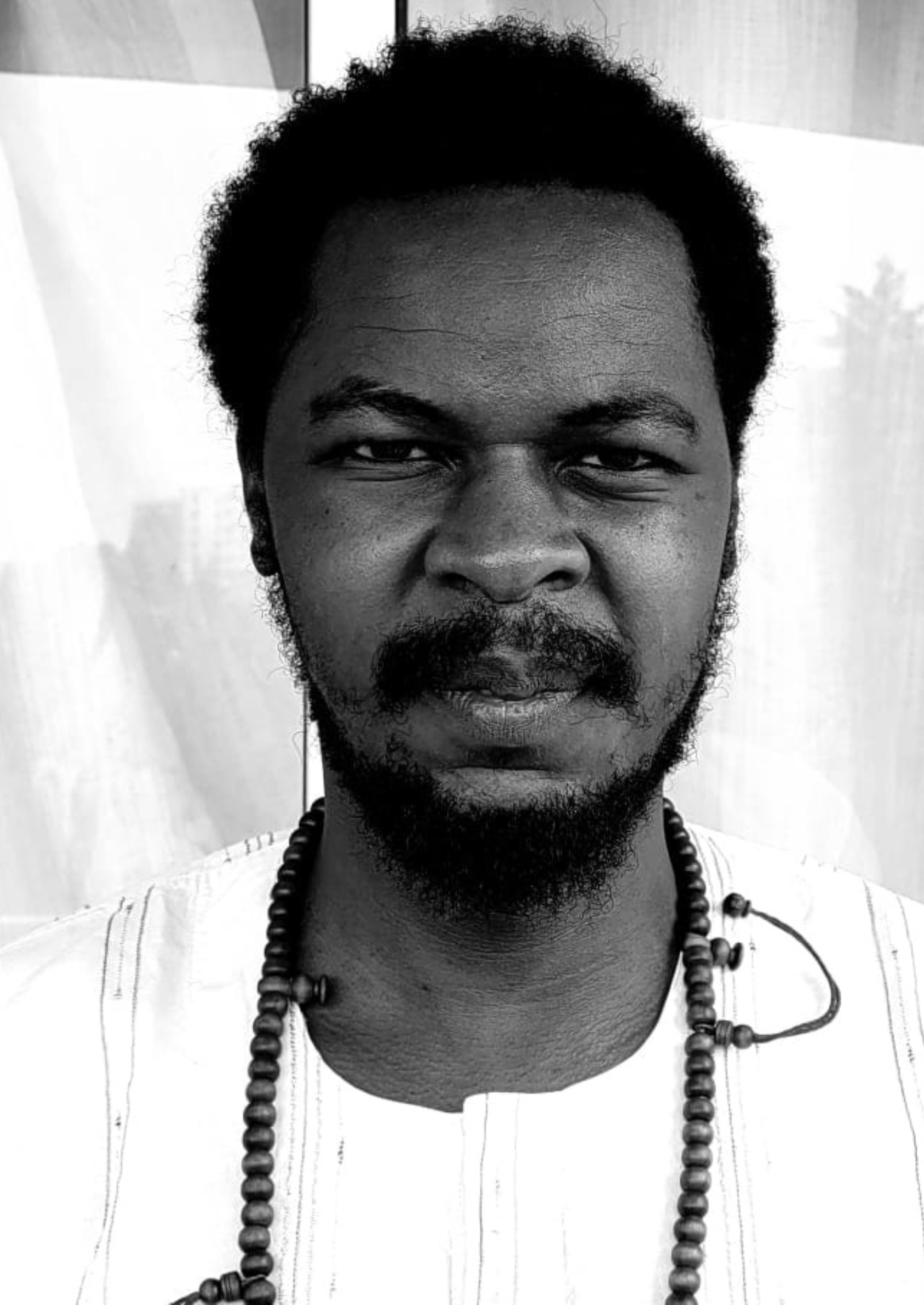
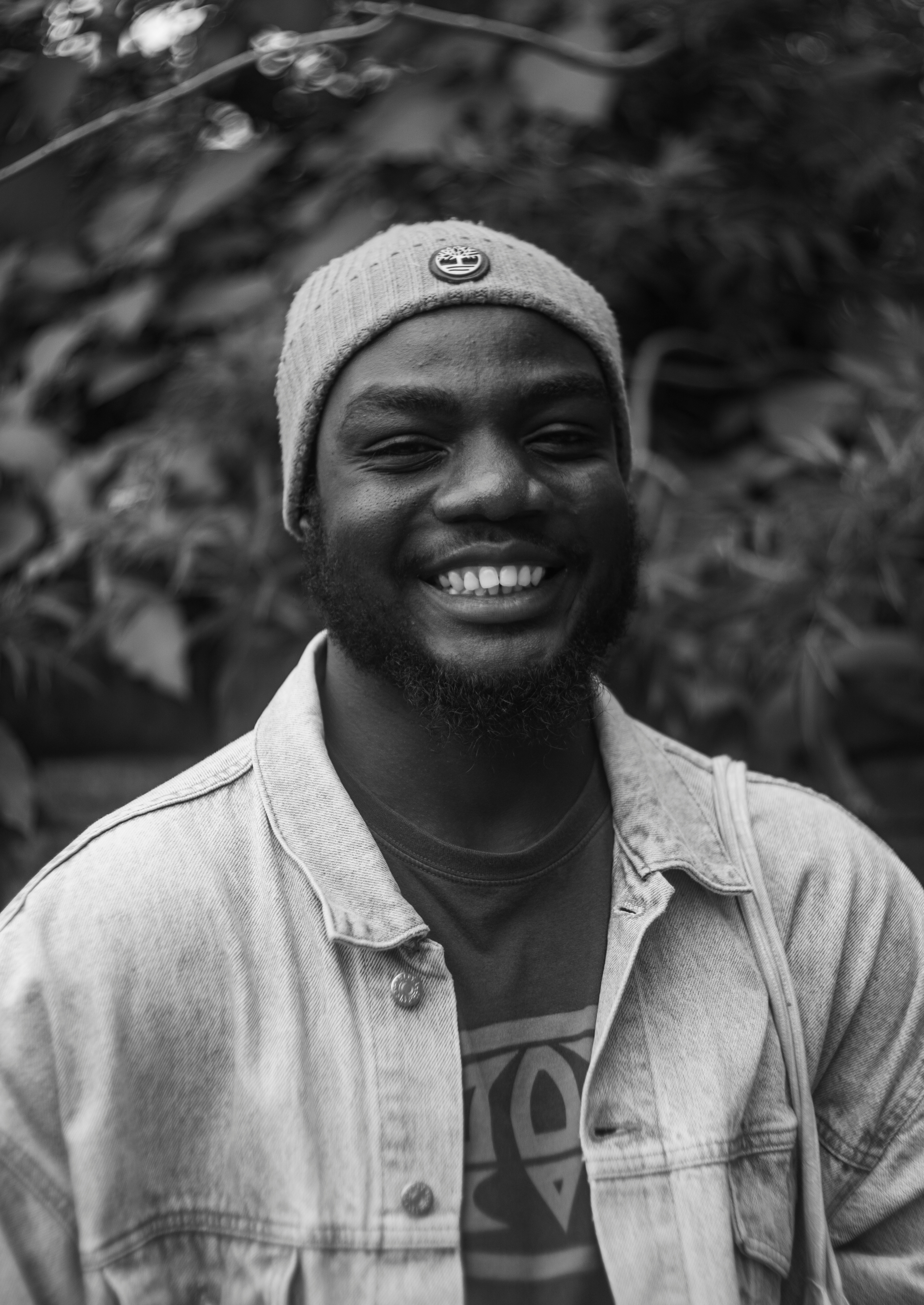
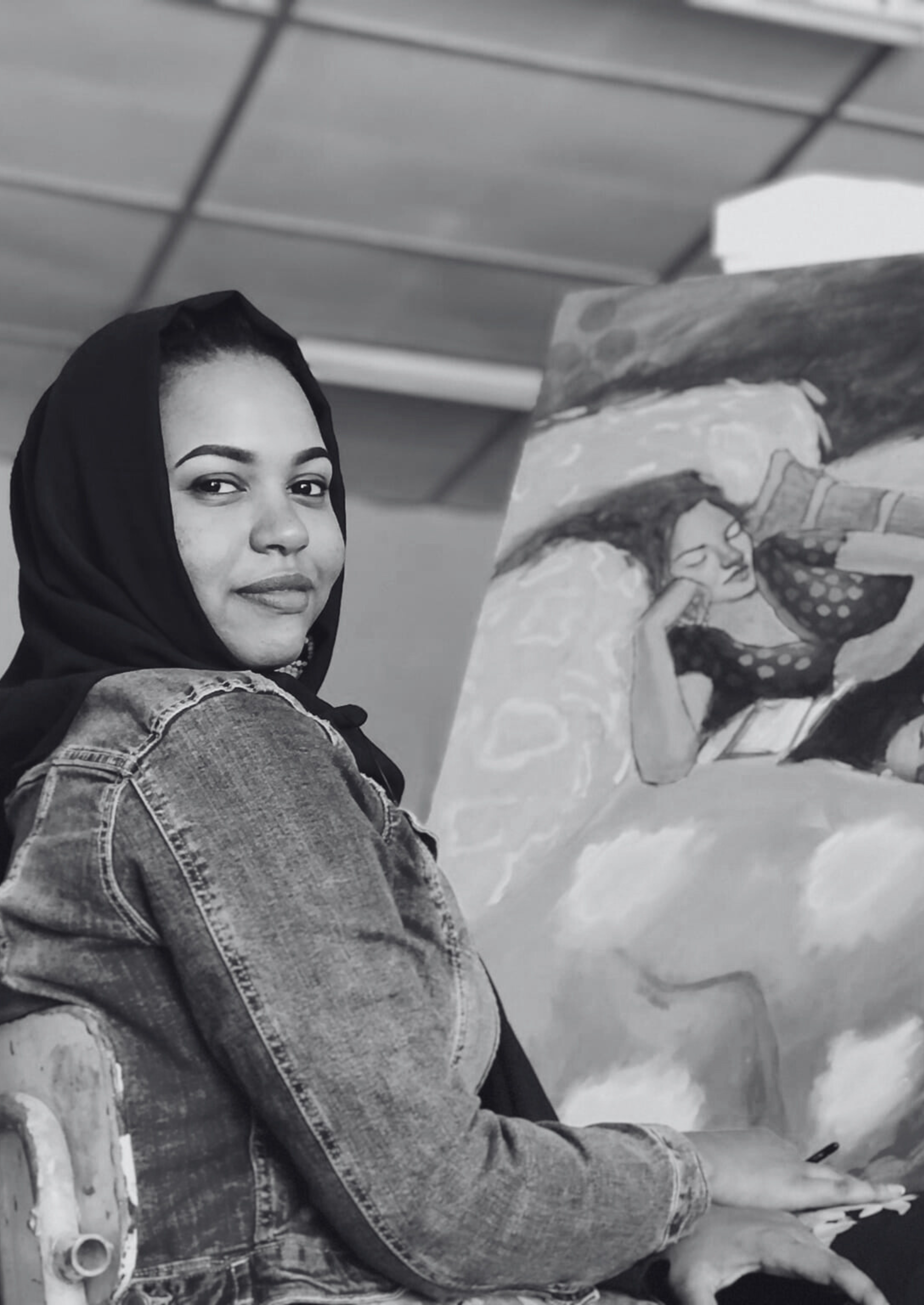
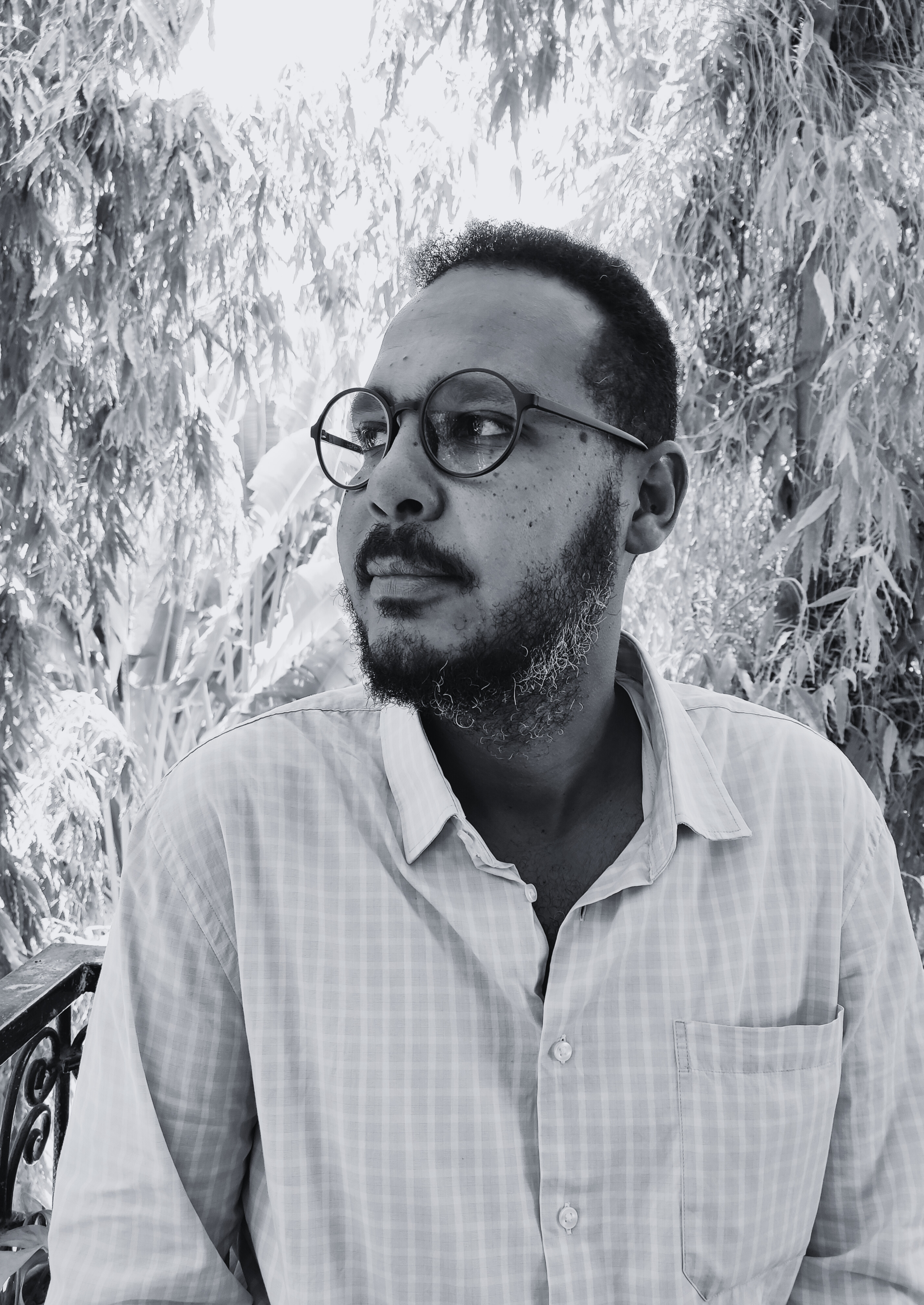
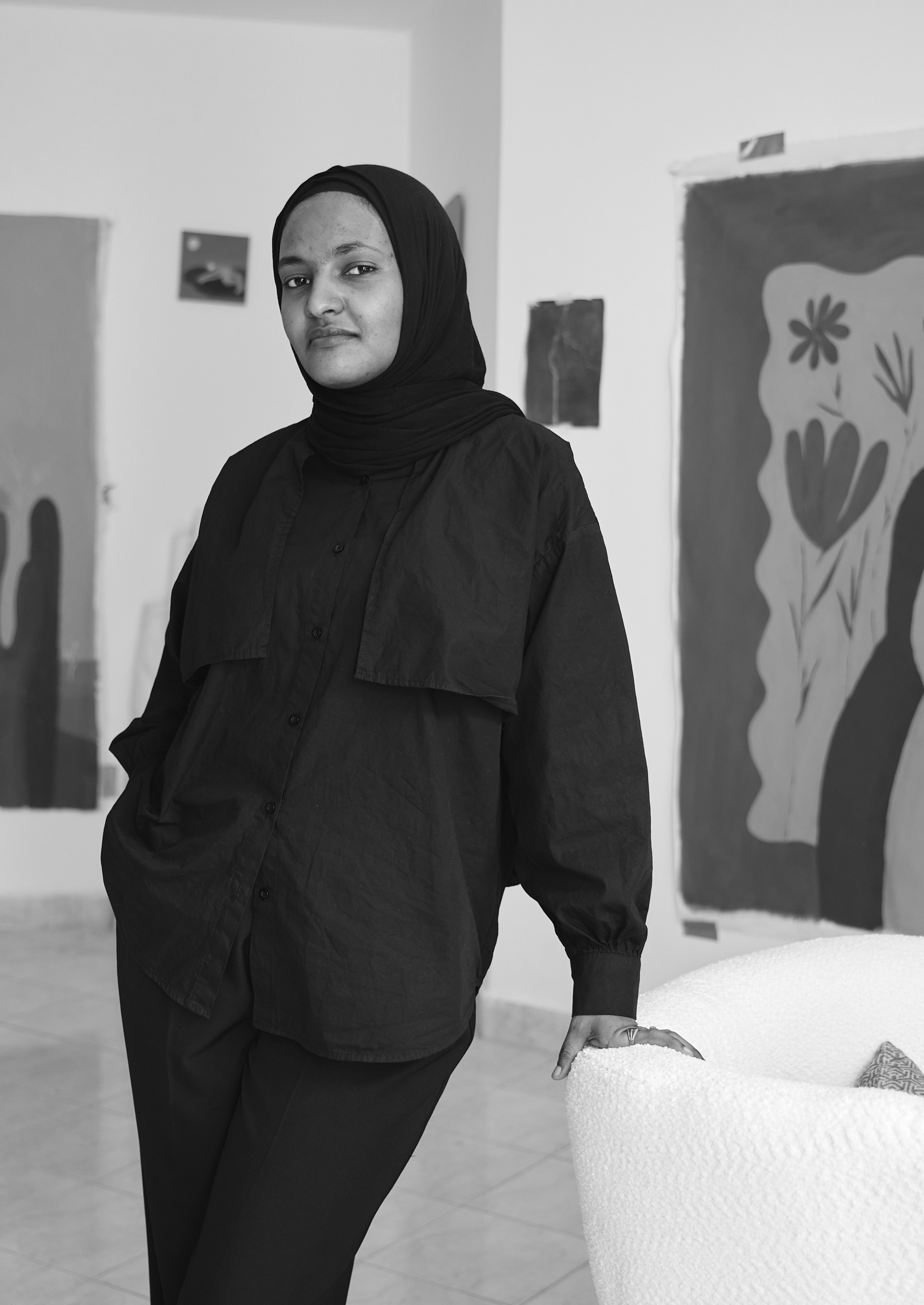
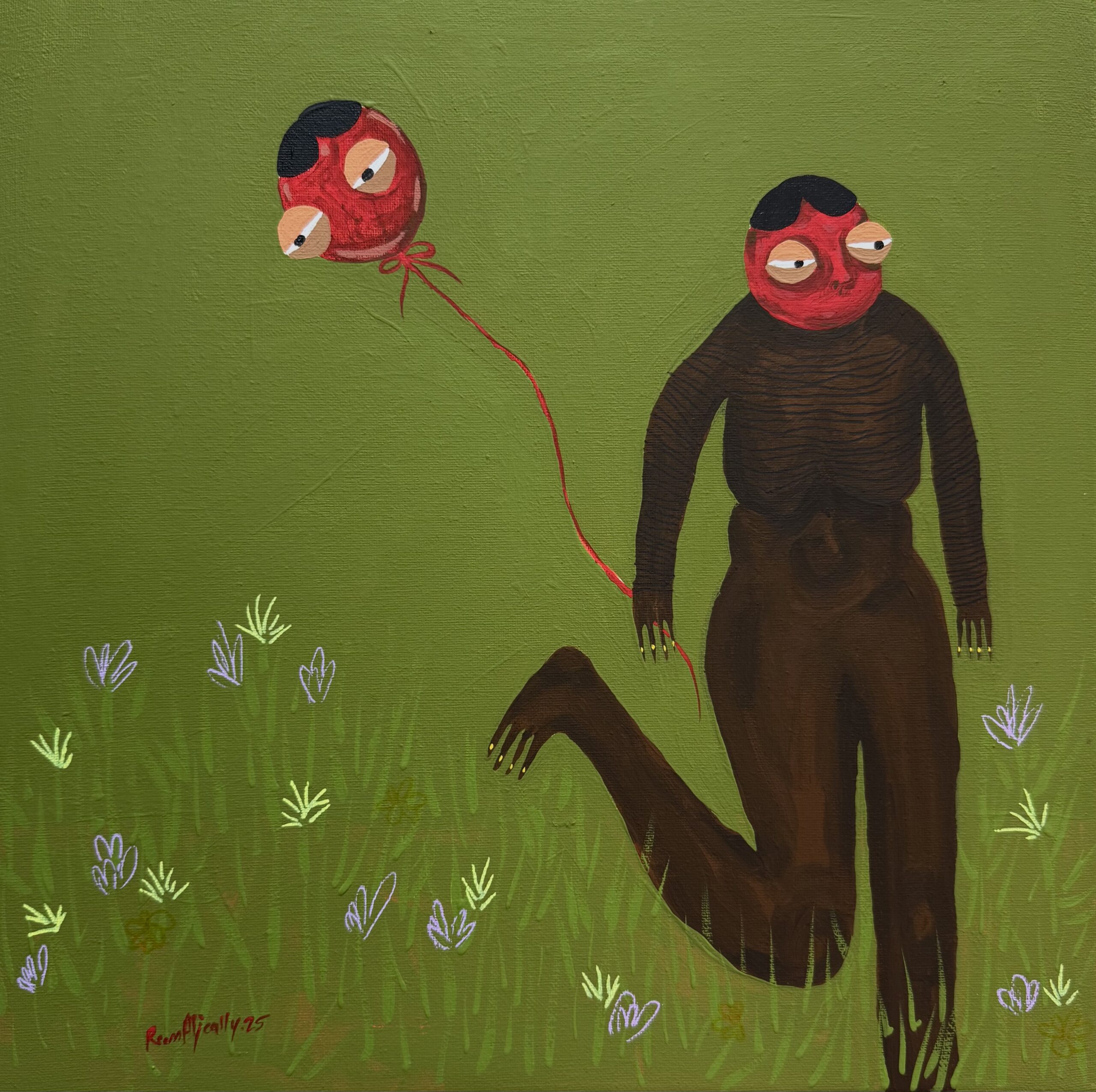
While this notion is not new in the relationship between the artist, the artwork, and the environment that surrounds it or in which it was created, this collection seeks to understand this connection through focusing on the visual abruptness and transformations that carry layers of political, social, economic, and emotional attributes. “Standing As An Observer Of History” positions the artwork – and in term its creator – as a witness to change, not necessarily to tell anything or analyse a history or situation, but a mere observer to the state of both movement and stagnation created in estranged environments and amidst liminality. While positioning the artist and artwork as witnesses or observers suggests a form of detachment, this stance is, in itself, a deliberate act of resistance and endurance, a refusal to simplify lived realities into singular narratives. The selected works by Almogera Abdelbagi, Mozafar Ramadan, Waleed Mohammed, Amani Azhari, and Reem Aljeally interrogate how temporal liminality alters visual production, perception, behavior, and the very fabric of spatial and social relations.
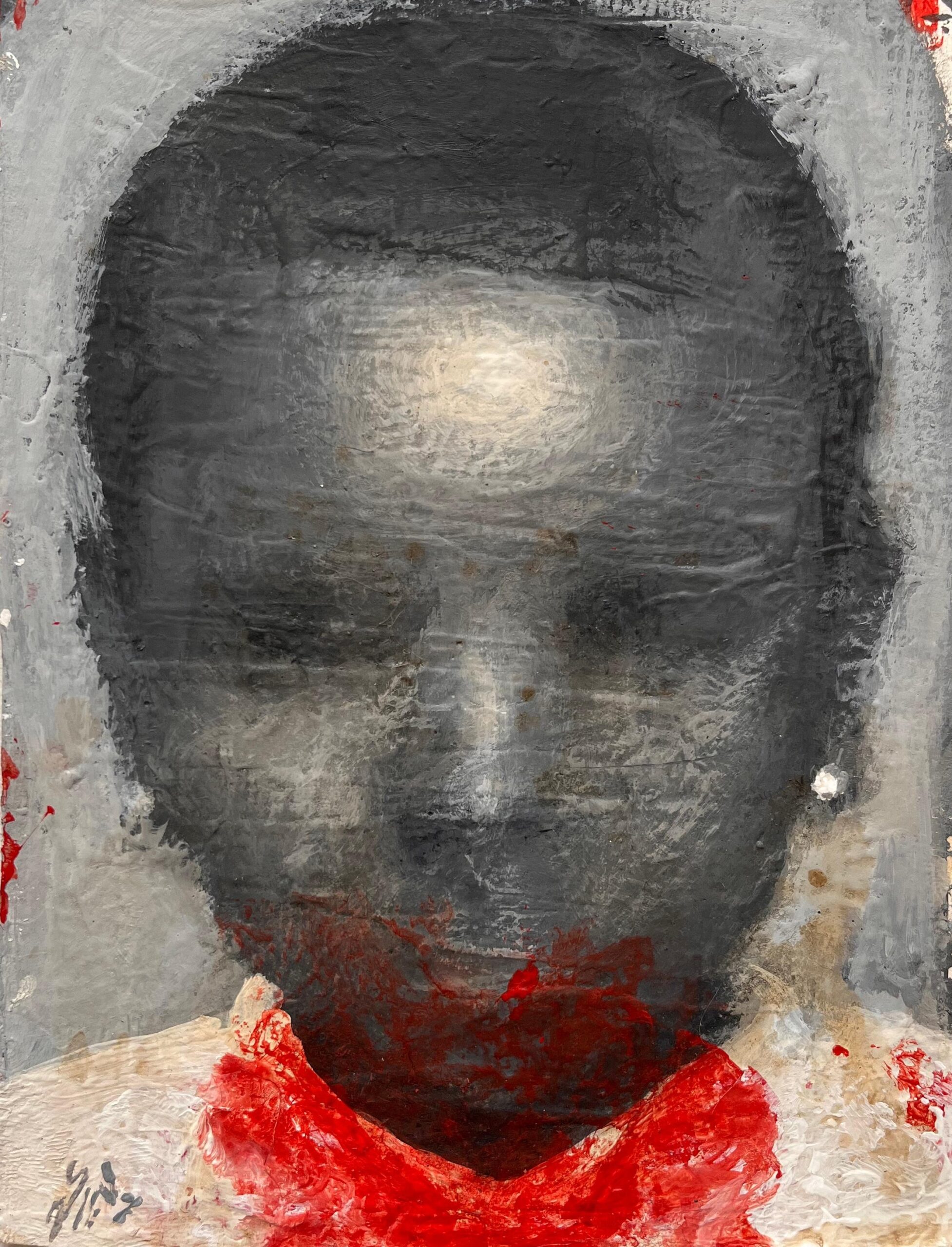
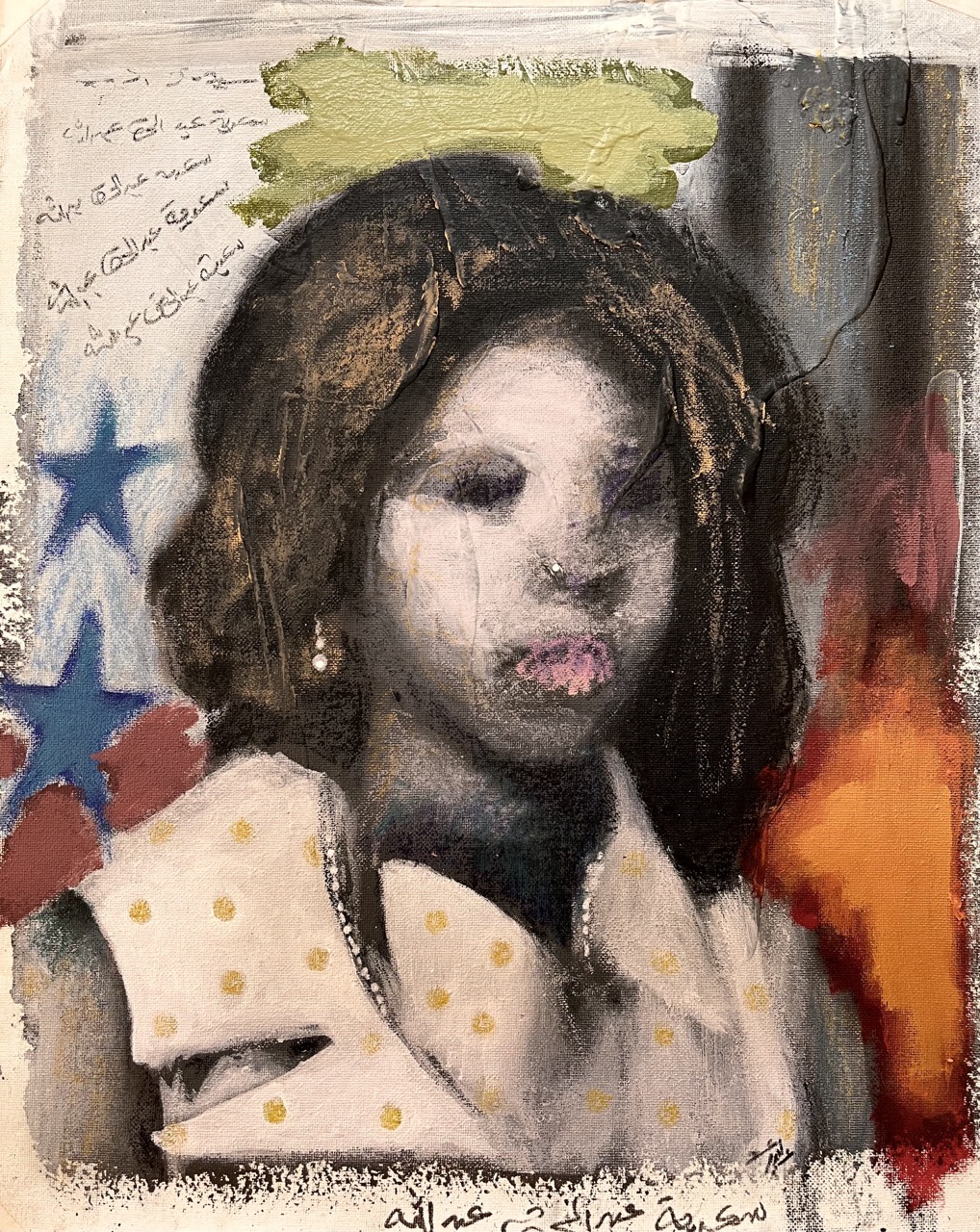
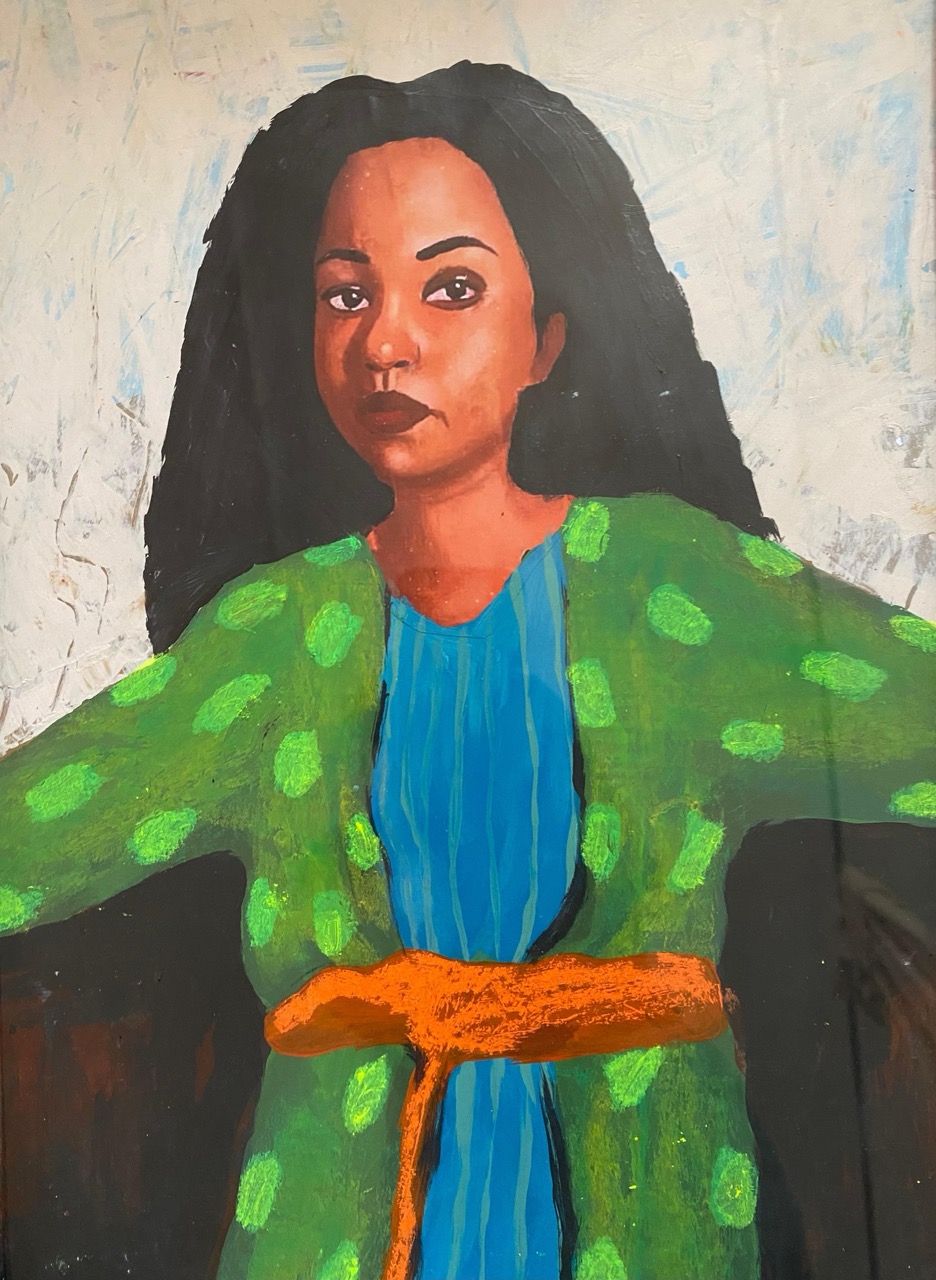
In the collection “Humanities”, Almogera Abdelbagi – known for his vibrant colors and bold brush strokes – muted not only his backgrounds with a specific coverage of white paint, but also the features of his figures into smudges of dark colors that seem to kill the livelihood of their existence in simulation to what waiting does to one’s spirit. Abdelbagi’s muting of backgrounds and obscuring of figures visualizes the erosion of stability and reflects how political and social upheaval profoundly alters the artist’s internal visual landscape. Amani Azhari’s paintings of vividly dressed women extend this inquiry, documenting repetitive, ritualized gestures that embody cyclical time. Her protagonists occupy thresholds, neither progressing nor regressing, yet their labor asserts agency within constraint. Her compositions focus on female spaces and the collective solidarity that is reassured within these intimate spaces.
In Khartoum, Waleed Mohammed’s work stood on archival images and abstract recreation. His most recent work between Nairobi and Kampala continues to base on these images, yet instead of recreation, here we find reimagination, investigation and tracing histories of displacement and fractured memories. Mohammed finds that the images contain powerful avenues for connection beyond spatial and temporal limitations.
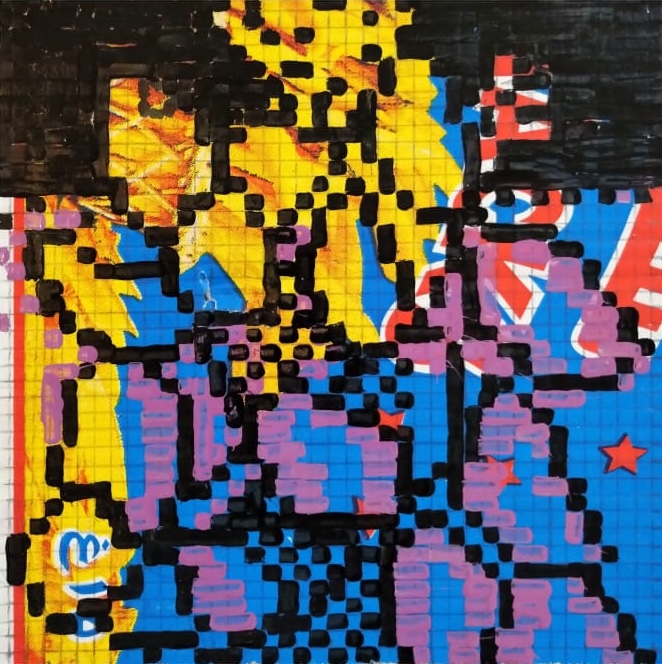
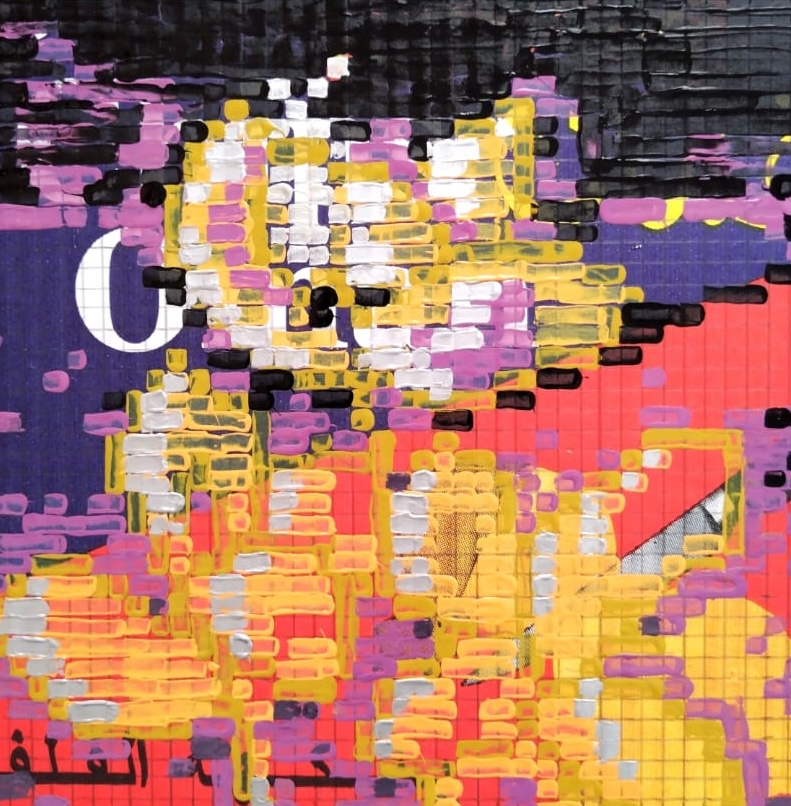
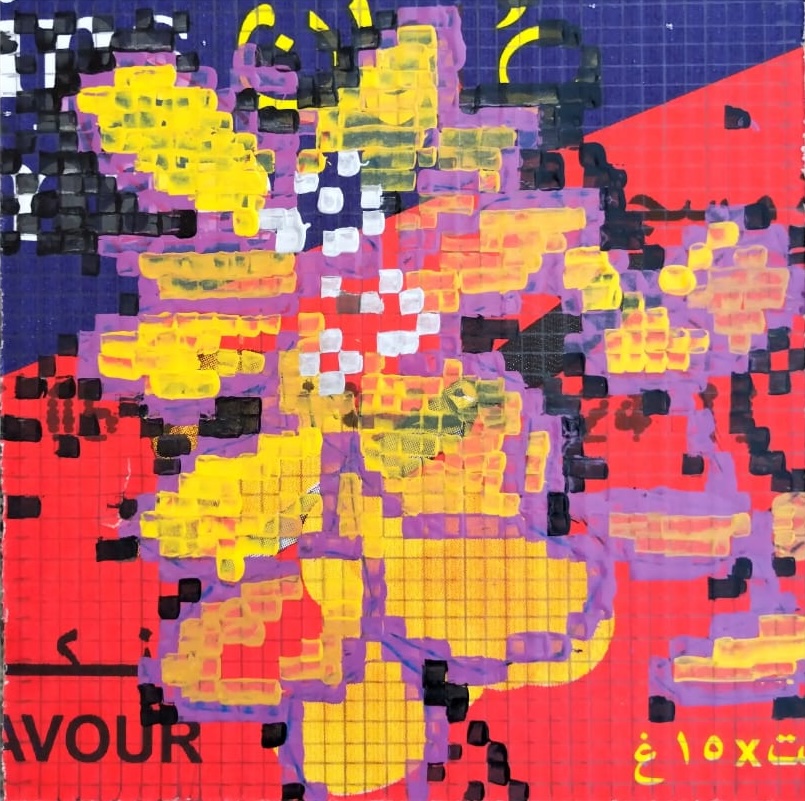
While the abovementioned artists focus on portraiture, Mozafar Ramadan draws our attention to the land and its elements as witnesses of transformation. He employs abstraction to map psychic spaces and imagery shaped by waiting and uncertainty. Ramadan’s layered work in his recent collection “Temporary”, utilizes recycled materials and repetition with the main element being “Al-Aushar” plant – scientifically known as Calotropis Procera, a commonly found plant in Sudan that grows randomly in deserted areas. Ramadan mimics the plant’s adaptability to its surrounding harsh environment and draws a comparison to his reality in navigating his new environment in Muscat, Oman. His compositions build on the illusion of a familiar image he recalls from memory smudged with distortion as it decays in the mind. His work rejects catastrophic temporality, instead proposing alternative rhythms that defy collapse. Through his focus on the symbolism of the Al-Aushar plant, Ramadan invites us to look into the connection between ecology and humanity and how nature can be a witness as much as people.
This collection reframes these artists’ realities through the lens of temporality, revealing how their work captures suspended existence, where resilience emerges in liminality, and the ephemeral becomes a site of reimagined futures. While the artworks in their visual output strip away context, their realities and circumstances of creation ask how identity persists when external markers dissolve. Through their nuanced portrayals of waiting, solitude, and endurance, the artists reveal how moments of stillness are charged with quiet strength, transforming passivity into profound acts of survival and hope in times of uncertainty.